
Chatbots vs AI Agents: What’s the Real Difference? 🤖⚔️🧠
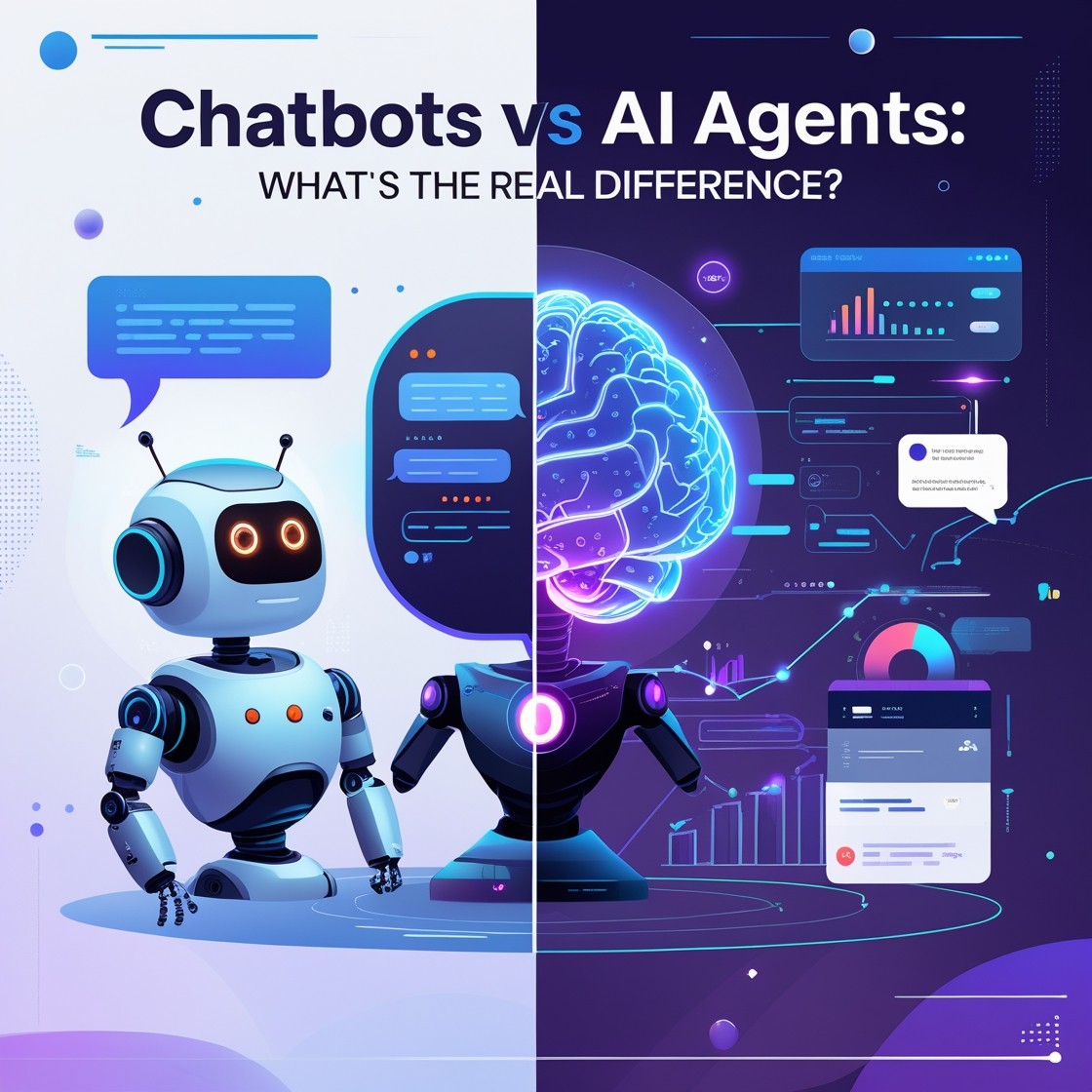
In the ever-evolving world of AI, two buzzwords often get thrown around like they're the same thing: Chatbots and AI Agents. But here's the truth—while both talk to users and live inside apps or websites, they’re not the same.
Understanding the difference between the two is crucial—especially if you're looking to build smart tools, automate business processes, or just sound smart in your next client meeting 😎.
What Is a Chatbot?
A chatbot is a rule-based or NLP-powered software designed to simulate conversation. It follows scripts or pre-trained paths to answer questions.
Example:
Customer: "What are your working hours?"
Chatbot: "We’re open from 9 AM to 6 PM, Monday to Saturday."
Chatbots are great at:
Answering FAQs
Booking appointments
Collecting basic user data
Navigating users through menus
But here’s the catch: they don’t think. They just respond.
What Is an AI Agent?
An AI agent, on the other hand, is way more advanced. It doesn’t just answer—it analyzes, plans, and takes actions based on your goals.
AI agents can:
Understand context deeply 🧠
Make decisions based on real-time data
Learn and improve continuously
Handle complex tasks like writing strategies, optimizing websites, or managing ads
They operate using a perception → reasoning → action loop—just like a human brain.
Example:
A marketing AI agent doesn’t just say “Your ads aren’t working”, it says:
"Your ads underperformed by 28% this week. Suggest reducing budget on Ad Group B and trying a new CTA."
💥 Big difference, right?
Key Differences at a Glance
The key difference between chatbots and AI agents lies in their intelligence and functionality. Chatbots are generally rule-based or use basic natural language processing to deliver pre-defined responses. They're ideal for handling straightforward tasks like answering FAQs, booking appointments, or guiding users through a set process. On the other hand, AI agents are far more advanced. They possess higher intelligence, powered by machine learning and reasoning capabilities, which allows them to understand context, learn from user interactions, and make autonomous decisions.
While chatbots provide linear interactions—meaning users are led through fixed conversation paths—AI agents offer dynamic, context-aware responses. They can analyze large datasets, strategize actions, and improve continuously without manual reprogramming. For instance, where a chatbot might just answer a question about ad performance, an AI agent can proactively recommend changes, adjust strategies, and execute improvements based on data analysis.
In short, chatbots are reactive tools—best for predictable queries—whereas AI agents are proactive digital assistants capable of performing complex, evolving tasks. Choosing between them depends on your goals: for simple customer support, go with chatbots; but if you're aiming for intelligent automation and decision-making, AI agents are the real game-changer.
Which One Should You Use?
It depends on your goal:
✅ Want a simple assistant for customer queries? → Chatbot
🚀 Want a smart assistant to boost business performance? → AI Agent
If you’re building next-gen SaaS tools, AI agents are the future. They don't just talk—they think, act, and evolve.
Final Thoughts 🔍
Both chatbots and AI agents have their place—but knowing the difference can help you build smarter solutions, impress clients, and stay ahead in the digital game.
At Spectrum Groups, we’re building AI tools that go beyond bots. Tools that think like a strategist, act like an expert, and work like your best teammate.
Written by Anish BR
AI Strategist | Web Designer
👉 anishbr.com